A creator with a large audience usually arrives at the same fork. The training sells, the following is real, and a marketplace or storefront has carried the business this far. The next move tends to look like two options. Stay on a platform where the audience is shared and the relationship is not fully yours, or go build your own app and take on a software project to do it. Both have real downsides at this scale.
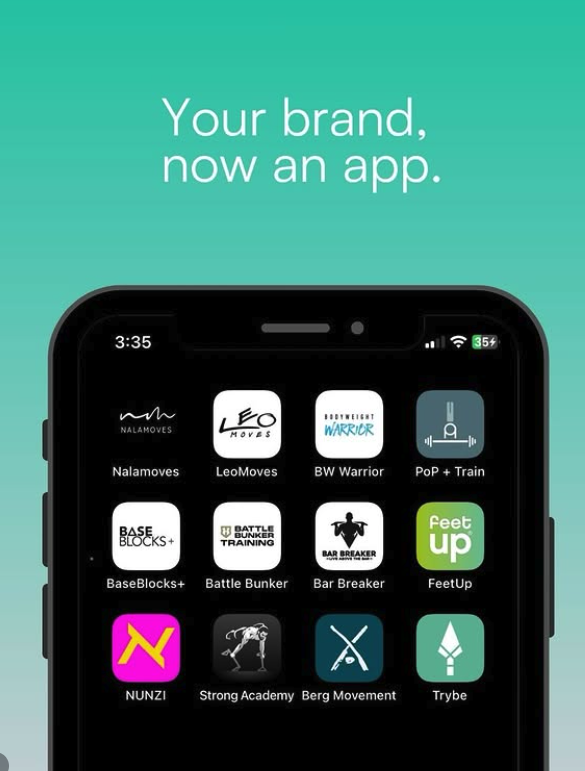
A white label fitness app on the Trybe platform is a third path. It gives a creator their own app, their own listing in the App Store and Google Play, and their own icon on the customer's phone, without turning the creator into a software company to get there. This post is about that option specifically: what it is, how it compares to building your own app from scratch, and which creators it tends to fit.
What a white label fitness app means on Trybe
White label is the second tier on the Trybe platform. The first tier is a branded space inside the Trybe app, reached by deeplink, which is the right fit for most creators. White label is a different shape of distribution.
The difference is where the app lives, not how it works inside. A white label creator gets their own dedicated app in the App Store and Google Play, listed under their own name, with their own icon on the home screen, their own store metadata, and their own ratings and reviews. That is the part that changes.
What does not change is the infrastructure underneath. A white label app runs on the same Trybe platform as every branded app: the same purpose-built program engine, the same skill tracks, the same follow-along video, the same structured progressions, the same fitness-native delivery. The in-app experience is the proven Trybe experience either way. White label is not a separate product build. It is the same platform, distributed as the creator's own app in the stores.
Why the top of the creator economy is a different segment
The shape of the broader creator economy supports the case for separate tiers. According to Goldman Sachs Research, the creator economy is on track to roughly double in size by 2027, from $250 billion today to $480 billion. Inside that growth, the share of creators considered professionals stays roughly steady at around 4 percent of the world's 50 million creators. The top of the curve is expanding in dollars, not in headcount.
The structural point inside that data matters here. The professional tier is not just a bigger version of the average creator. The businesses tend to be brand-led, the customer relationship is doing real long-term work, and the product surface either reinforces the brand or dilutes it. A shared product environment, even a well-built one, starts to feel like leaving value on the table.
White label is the tier of the Trybe platform built for that kind of business: the creator whose brand is doing real commercial work and who wants to own the app that carries it.
The real alternative is building it yourself
For a creator at this scale, the genuine competitor to a white label app is not another platform. It is the custom build. Hire an agency or a developer, design the app, build it, test it, and ship it. That is the part most creators picture when they imagine owning their own app.
The part they tend to underestimate is everything after launch. An app in the App Store is not a one-time project. Apple and Google change their requirements regularly, and an app that is not maintained falls behind, breaks on new operating system versions, or gets pulled from the store. Staying live means an ongoing cycle of updates, compliance work, bug fixes, and review submissions. Adding anything new, a feature, a content type, a payment change, means going back into the development cycle every time.
So the custom route is really two commitments, not one. The first is building the app. The second is running a small software operation indefinitely to keep it alive and moving. For a creator whose actual job is coaching, programming, and building an audience, that second commitment is the expensive one. It pulls time and money away from the work that grew the business in the first place.
A white label app on Trybe is built to remove that second commitment. The creator gets their own app in the stores, and the platform handles the engineering underneath: operating system updates, App Store and Google Play compliance, maintenance, and new features that ship across the platform over time. The creator owns the brand and the customer. Trybe owns the software problem.
What you own with a white label app
The ownership a white label app gives you is concrete. You get your own listing in the App Store and Google Play under your own name, which means you show up in store search and accumulate your own ratings and reviews over time. You get your own icon on the customer's home screen, sitting next to the other apps they open daily. And you own the customer relationship at the store level, rather than reaching your audience through a shared app.
That is the difference that matters for a creator coming off a marketplace, where the audience is shared and discovery runs through someone else's platform. We covered that ceiling in Graduating From the Marketplace. White label is the version of that move where the creator owns the app itself.
When white label is the right move
White label tends to be the right move when the brand is doing real commercial work, not sitting as decoration on top of a generic offer, and when the customer relationship has clear long-term value worth owning at the store level. It fits creators who already have the audience to fill their own app and want that audience landing in a product with their name on it, not a shared one.
It also fits a launch that is brand-defining. If the App Store listing is going to be a marketing surface, a campaign destination, or a press talking point, the listing should carry the creator's name.
When those conditions are not in place yet, the branded tier on Trybe is the better starting point. It gets the training in front of the audience in a real app environment, with the same fitness-native engine doing the work, without a separate store listing to stand up. Plenty of creators start there. The platform is built to serve both, and moving between them is a business decision, not a rebuild.
Starting the conversation
There is no public threshold for white label on Trybe. Fit is established in a conversation, not against a posted bar. We work directly with the creator to look at the shape of their business, the role the brand is doing, the customer relationship they are building, and what they want their app in the stores to be. From there it is clear whether white label is the right move or whether the branded tier is the better starting point. If you are still weighing the wider set of options, we mapped the landscape in Comparing the Top Platforms for Fitness Creators in 2026, and the case for moving training into a real app home in Give Your Training a Home, Not a Finish Line.
Trybe is built for the case where fitness is the business, the audience is already there, and the next move is owning the product without taking on the software problem that usually comes with it. White label is what that looks like for the creators ready to own the App Store listing too.